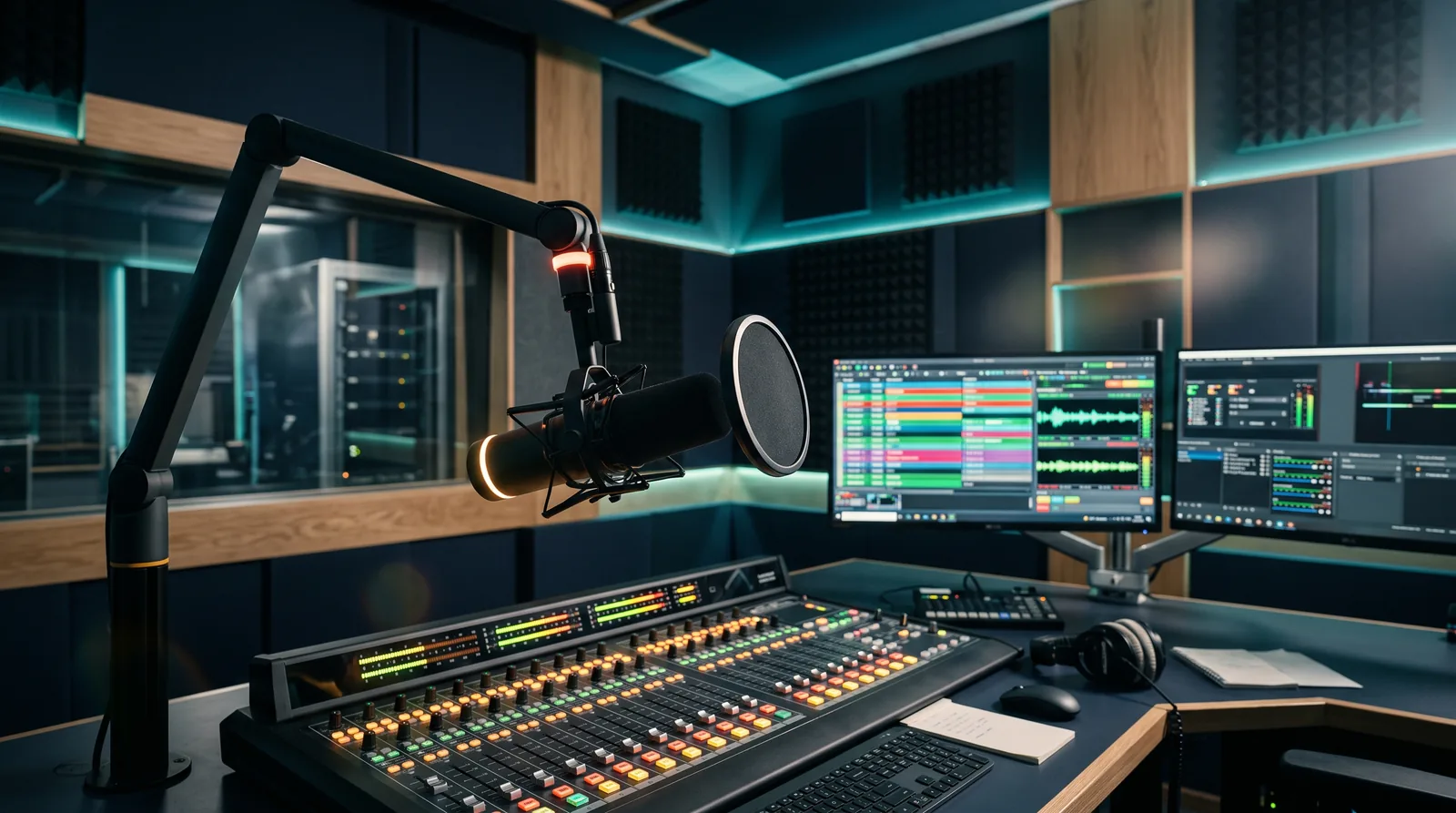
Radio Broadcasting and Audio Streaming
Studio workflow, playout and delivering reliable audio streams.
Courses in this pathway
Course
PRORadio Broadcasting and Audio Streaming
Learn radio broadcasting from the chain up: how radio works from studio to listener, audio levels and EBU R 128 loudness, the studio with microphones and mix-minus, digital audio formats and codecs, playout, logs and scheduling, broadcast audio processing, FM transmission with deviation and the stereo multiplex, AM and DAB digital radio, antennas, ERP, VSWR and coverage, studio-to-transmitter links and IP audio, internet streaming with Icecast and HLS, stream encoding, metadata and reliability, transmitter site power and RF safety, licensing and music rights, monitoring and troubleshooting, and running a station. Includes command labs, two build projects and a graded capstone.
Course
PRORadio in Practice: The Arithmetic That Keeps a Station on Air
Learn the arithmetic behind a radio station that stays on air, with Python on invented station jobs in your browser. Bring a library to a loudness target in LUFS with true-peak headroom, check the clock of an hour for overruns and gaps, plan the bandwidth of a stream server, work out streaming latency from segments and buffers, calculate the bandwidth of FM stations with Carson's rule and the gap between neighbours, work out the effective radiated power and the coverage of a transmitter, plan standby power with a UPS and a generator, audit the log against licence quotas, and find dead air, with a clean log that must say ok. The data is generated for you alone, and the functions you write are also tested on hidden data with the edges that real stations find first.